The Complete F-1 Visa
Guide
Everything you need to know about studying in the United States. From your first application step through post-graduation work authorization.
12
Detailed Sections
50+
Topics Covered
2026
Updated
What's in this guide
F-1 Visa Overview
The F-1 student visa is the primary nonimmigrant classification for international students pursuing full-time academic programs at accredited U.S. institutions. It is the most widely held student visa in the United States, issued to hundreds of thousands of students each year.
The F-1 visa covers enrollment at universities, colleges, seminaries, conservatories, academic high schools, elementary schools, language training programs, and other academic institutions. Your eligibility begins the moment you receive an admission offer from a school certified by the Student and Exchange Visitor Program (SEVP). The school issues you a Form I-20, which is the document that links you to the Student and Exchange Visitor Information System (SEVIS), the government database that tracks every F-1 student in the country.
Visa Stamp
- Physical sticker in your passport
- Allows you to request entry at a U.S. port
- Can expire while you are in the U.S.
- Only needed for re-entry after travel
F-1 Status
- Your legal authorization to remain in the U.S.
- Maintained by following F-1 regulations
- Lasts for Duration of Status (D/S)
- Violated by unauthorized work or dropping out
Eligibility Requirements
To qualify for an F-1 student visa, you must satisfy both the academic requirements set by your school and the immigration requirements set by the U.S. government.
SEVP-Certified School
You must hold an offer of admission from a school certified by the Student and Exchange Visitor Program, and the school must have issued you a Form I-20.
Full-Time Enrollment
You must intend to enroll as a full-time student. For undergraduates, this typically means 12+ credit hours per semester. For graduate students, usually 9+ credit hours.
Financial Ability
You must demonstrate sufficient funds to cover tuition, fees, and living expenses for at least the first year of study.
Nonimmigrant Intent
You must demonstrate strong ties to your home country and a credible intent to return after completing your studies.
English Proficiency
You must demonstrate sufficient English language ability through standardized test scores (TOEFL, IELTS, Duolingo) or enrollment in an English language program.
Valid Passport
Your passport must be valid for at least six months beyond your planned period of stay in the United States.
Application Timeline
The F-1 visa application process involves multiple steps, each with its own timeline and dependencies. Most students should begin three to six months before their program start date.
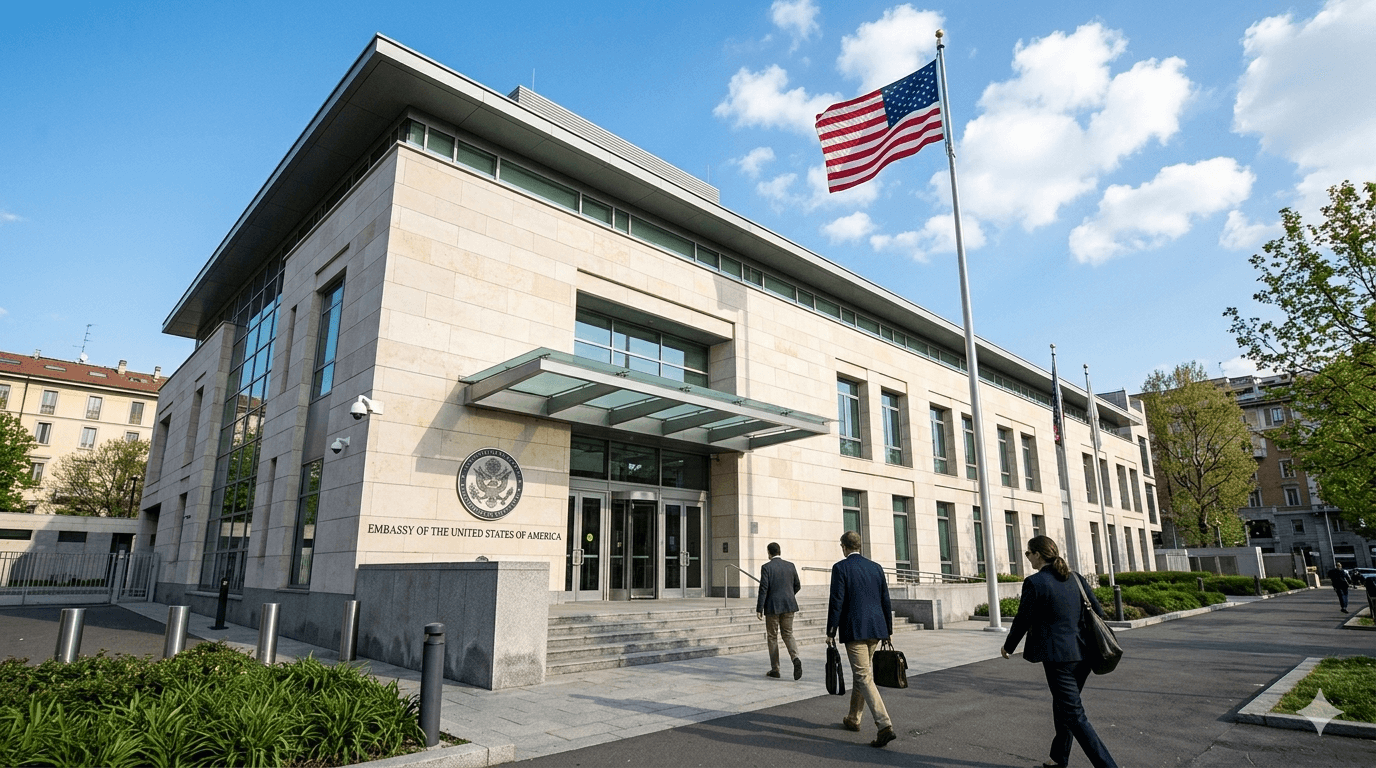
Your interview day
Walking into the embassy can feel overwhelming, but remember: you have prepared for this. Thousands of students walk through those doors every year and come out with their F-1 stamp. Your documents are ready, your story is clear, and your future is waiting.
Receive your I-20
After you accept your admission offer and submit financial documentation, your school's international student office will issue your Form I-20. Verify every detail: your name (must match your passport exactly), SEVIS ID, program dates, estimated costs, and school information.
Pay the I-901 SEVIS fee ($350)
Pay the SEVIS fee online at fmjfee.com. You will need your SEVIS ID (starts with N) from your I-20 and your passport information. Save and print the payment confirmation.
Complete the DS-160 online
The DS-160 is the Nonimmigrant Visa Application, completed entirely online at ceac.state.gov. It takes 60 to 90 minutes to complete. Save the confirmation page with the barcode.
Schedule your visa appointment
Visit your local U.S. embassy or consulate website to schedule your interview. Pay the MRV application fee ($185). Book as early as possible since wait times vary dramatically.
Attend the visa interview
Arrive early with all required documents organized. The interview itself is typically brief (two to five minutes), but processing at the embassy may take several hours.
Receive your visa and travel
If approved, your passport will be returned with the F-1 visa stamp within a few business days to two weeks. You may enter the U.S. up to 30 days before your I-20 program start date.
Required Documents
Arriving at your visa interview with complete, organized documentation is one of the most important things you can do to improve your chances of approval.
Document Checklist
DS-160 Application
The DS-160 is the mandatory online visa application form. It collects your personal information, travel history, program details, and security-related questions.
Set aside 60 to 90 minutes to complete the DS-160 in one session, though you can save your progress and return later. You will need your passport, I-20, travel history for the past five years, employment history for the past ten years, and contact information for your school.
Name discrepancies: Your name must match your passport exactly, including middle names, patronymics, and multi-part surnames.
Incomplete travel history: List all countries visited in the past five years. Omitting a country can raise red flags.
Wrong program dates: Ensure dates match your I-20 exactly.
Photo rejection: Use the State Department's photo tool to test your photo before uploading.
Visa Interview
The step that causes the most anxiety. Understanding what to expect and how to prepare will significantly improve your confidence. Most F-1 interviews last only two to five minutes.
1.Why do you want to study in the United States?
Focus on specific academic reasons: program quality, research opportunities, faculty expertise, or resources unavailable in your home country.
2.Why did you choose this university?
Mention specific program strengths, rankings, research labs, faculty members. Show you researched the school thoroughly.
3.What will you study?
Know your major, program structure, and key courses. For graduate studies, know your research area and potential advisor.
4.How will you pay for your education?
State the total cost, then explain each funding source with exact numbers. Point to your supporting documents.
5.What are your plans after graduation?
Describe your career plan in your home country. You can mention wanting OPT experience first, as long as your long-term plan involves returning.
6.Do you have family in the United States?
Answer honestly. Having family is not disqualifying. Emphasize your academic goals.
7.Have you been to the United States before?
Answer truthfully. If you visited, briefly explain the purpose and confirm you departed on time.
8.What do your parents do?
Briefly describe their occupations. This helps the officer understand financial capacity and home country ties.
9.What is your academic background?
Summarize your most recent degree, GPA if strong, and how it connects to your chosen U.S. program.
10.Why should we believe you will return home?
Mention family, property, job prospects, or specific career goals that require your degree. Be genuine.
Financial Requirements
Understanding the exact costs and how to document your financial capacity is critical. Insufficient or poorly presented financial evidence is one of the most common reasons for visa complications.
$350
SEVIS I-901 Fee
Paid at fmjfee.com
$185
MRV Application
Paid to embassy
Varies
Issuance Fee
By nationality
Varies
Biometrics
Some embassies
Work Authorization
Understanding your work options early will help you plan your career path and make the most of your time in the United States.
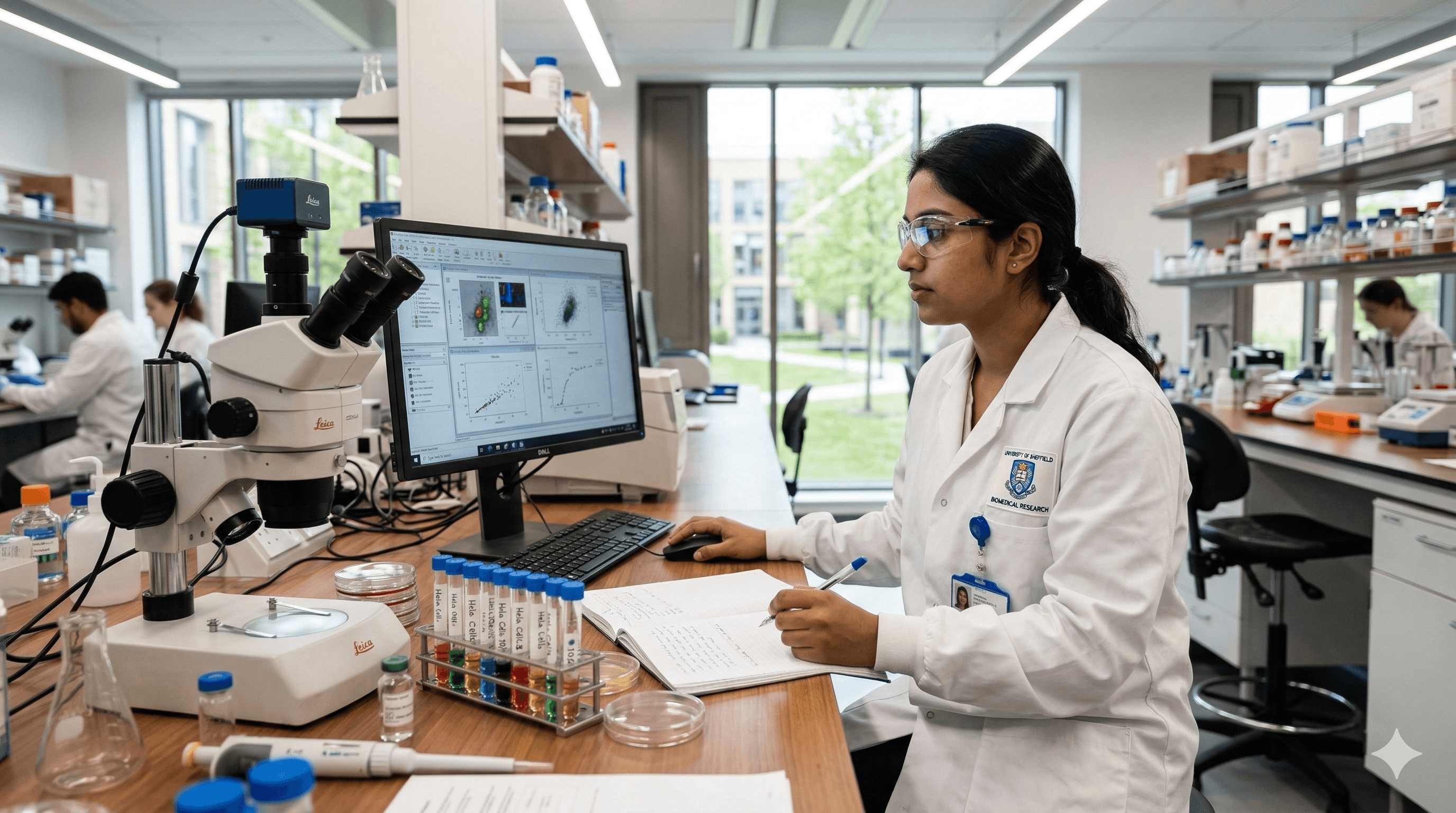
Your career starts here
The F-1 visa opens real doors. From your first on-campus job to a 36-month STEM OPT career at a top company, your work authorization options are more flexible than most students realize. Many of today's tech leaders, researchers, and entrepreneurs started exactly where you are.
On-Campus
No extra auth neededWork at the university itself: dining halls, libraries, research labs, administrative offices. Full-time during official breaks.
CPT
DSO authorizationOff-campus work integral to your curriculum: required internships, co-ops, practicum. Must be related to your major.
OPT
12 monthsWork authorization after completing your degree. Apply via Form I-765 to USCIS. Need EAD card in hand before starting.
STEM OPT
+24 monthsExtension for STEM degrees. Employer must be E-Verify enrolled. Total 36 months of work authorization.
Travel & Re-entry
International travel while on an F-1 visa requires careful planning. Traveling without proper preparation can result in being denied entry at the border.
Before any international trip, visit your DSO to get a travel endorsement (signature) on page 2 of your I-20. This signature is valid for one year for students in active status, and only six months for students on OPT.
Dependents (F-2 Visa)
Your spouse or unmarried children under 21 may accompany you to the United States on F-2 dependent visas. Their status depends entirely on you maintaining valid F-1 status.
Each dependent needs their own I-20, DS-160 application, visa interview, and SEVIS fee ($350 each). Financial documents must show you can support your dependents in addition to your own costs.
After Arrival
The administrative tasks in your first few weeks are critical for maintaining your F-1 status. Complete these steps promptly.
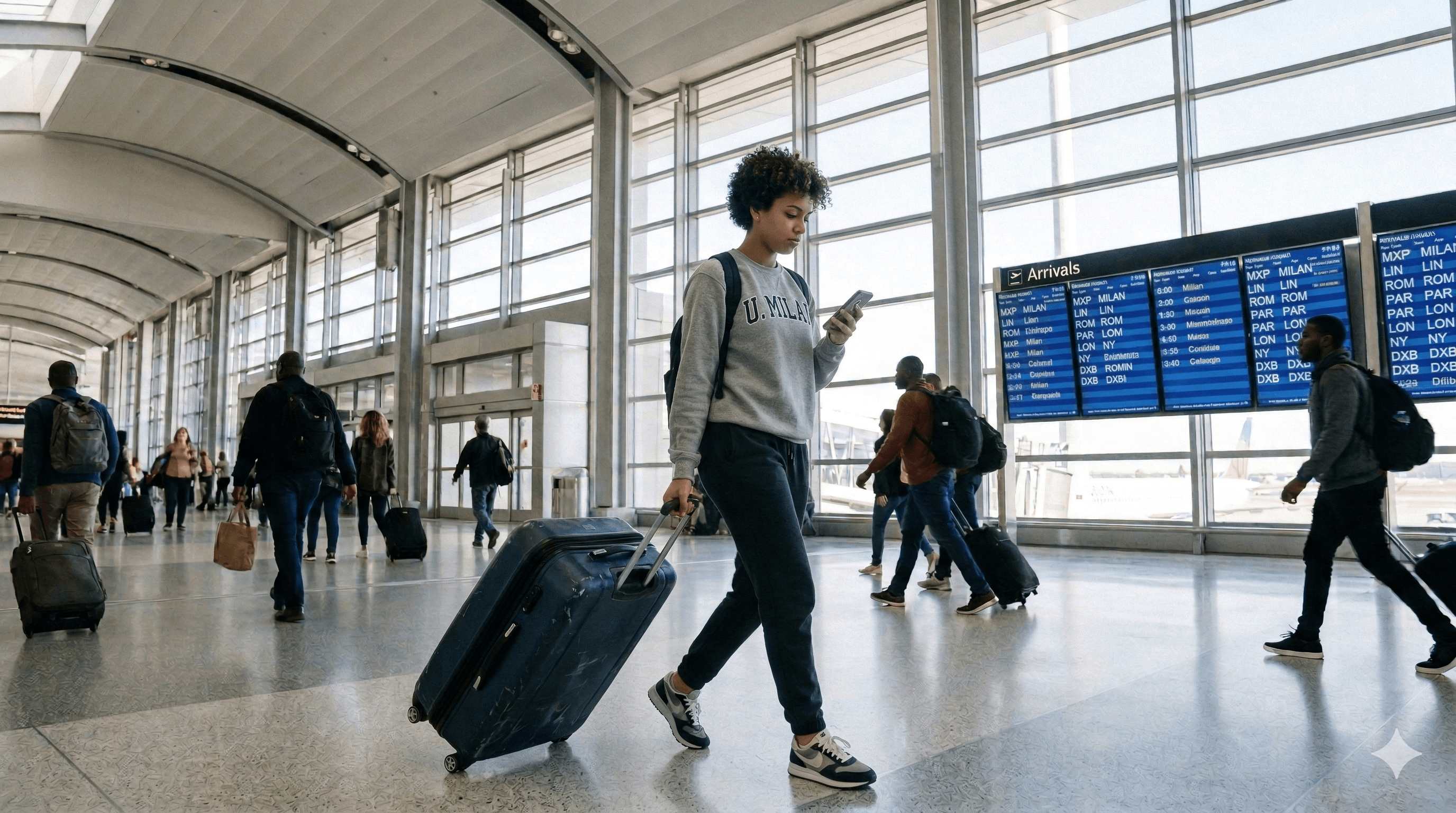
You made it
That moment you step off the plane and into your new life. All the paperwork, the interviews, the waiting; it was all for this. The first few weeks will fly by. Take a breath, soak it in, and handle the admin checklist below so you can focus on what really matters: your education.
After entering the U.S., go to i94.cbp.dhs.gov within 24 to 48 hours to download your I-94 arrival record. Verify it shows F-1 and "D/S" (Duration of Status).
If your I-94 shows incorrect information, contact your DSO immediately. You may need to visit a local CBP Deferred Inspection office.
Common Questions
Answers to the questions international students ask most frequently. Use the Visara chat for personalized guidance.
Ready to start your journey?
Get personalized university recommendations and application guidance. Tell Counselly about yourself and get started in 5 minutes.
Start Your Free Conversation